
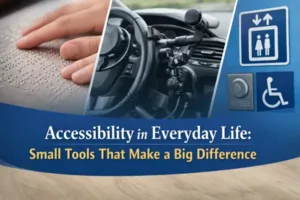
Accessibility isn’t always about big changes or fancy technology. Sometimes, it’s the small, thoughtful tools built into everyday life that make the biggest difference helping people stay independent, confident, and safe.
At Driving to Independence, we see this every day. Whether it’s adaptive driving equipment, clear signage, or tactile cues like Braille, these tools might seem minor but they can completely change someone’s ability to move through the world with confidence.
What Accessibility Really Means
When we talk about accessibility, we mean more than compliance or checklists. True accessibility is about designing spaces, tools, and systems so they can be used comfortably by as many people as possible regardless of physical ability, vision, hearing, or cognitive differences.
Accessibility done right:
- Supports independence rather than creating reliance
- Builds dignity and confidence
- Makes daily life smoother and safer
When it works well, it doesn’t call attention to itself, it just works, allowing people to focus on living their lives, not on obstacles.
Everyday Tools That Make Life Easier
Some accessibility tools are so common we barely notice them but they matter.
Braille: More Than Just Reading
Many people think of Braille only in books. But it appears everywhere:
- Elevator buttons
- Medication packaging
- ATMs and credit cards
- Public signage
These tactile cues give people essential information, helping them navigate spaces safely and independently.
Clear Signage and Smart Design
High-contrast text, simple layouts, and clear symbols help people process information quickly, reducing stress and confusion. Whether you’re guiding someone through a building or helping a loved one read labels at home, small design choices can make a big difference.
Tools That Support Daily Living
Accessibility also includes tools that support movement, coordination, and independence:
- Adaptive driving controls
- Mobility aids
- Assistive technologies that improve reaction time or awareness
- Adaptive kitchen and bathroom equipment to support daily routines
- Reachers, dressing aids, and tools that reduce strain and fatigue
- Smart-home technologies for lighting, doors, and temperature control
These tools let people keep doing the things they love – driving, cooking, or simply moving around their community, without unnecessary risk.
Independence Behind the Wheel
Driving is about more than getting from point A to B. It’s about independence, connection, and choice. Changes in vision, reaction time, or mobility don’t always mean someone has to stop driving, they often just mean adjustments are needed.
Accessibility in driving can look like:
- Personalized driving assessments
- Adaptive equipment tailored to the driver
- Coaching and training for confidence and safety
- Guidance for families navigating driving transitions
With the right support, drivers can maintain independence safely—or make a thoughtful, planned transition if needed.
Why Small Tools Matter
Even the smallest accessibility tools can have a huge impact:
- They reduce reliance on others
- They improve safety
- They build confidence
- They support long-term independence
Most importantly, they help people feel in control of their own lives.
Supporting Independence, One Step at a Time
At Driving to Independence, we know independence looks different for everyone. Our goal is to help individuals and families understand their options, feel confident, and access the tools and strategies that make daily life and driving safer and more empowering.
Accessibility isn’t about limits. It’s about possibilities. And often, it’s the little things that make the biggest difference.