
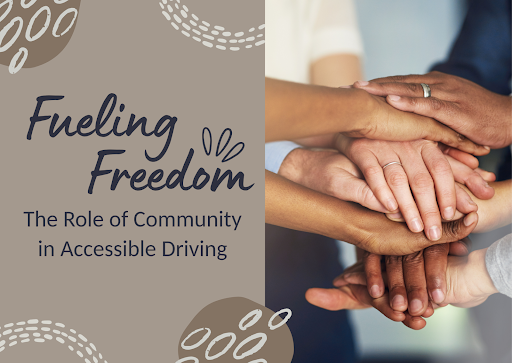
Driving means more than getting from place to place—it means autonomy, access, and opportunity. For individuals with disabilities, learning to drive or returning to the road after a major life change can be life-altering. But it doesn’t happen in isolation. Driving independence is a community effort, and the more support that surrounds the individual, the more successful—and sustainable—that independence becomes.
From advocacy groups to healthcare providers, small business owners to city planners, everyone has a role to play in making driving more accessible.
Here’s how communities can show up and help individuals with disabilities find freedom behind the wheel.
1. Medical Professionals: Recognizing Driving as a Key Part of Quality of Life
Doctors, occupational therapists, and rehabilitation specialists are often the first point of contact after an injury or diagnosis. Their support—or lack thereof—can strongly influence whether a patient sees driving as a future possibility.
How they can help:
- Include driving in recovery conversations as a goal, not an afterthought.
- Refer patients to certified driver rehabilitation specialists when appropriate.
- Educate patients and families on what adaptive driving involves and that it’s not one-size-fits-all.
- Work collaboratively to provide the documentation or assessments needed to begin the evaluation process.
For many patients, the belief that “I might drive again” starts in a doctor’s office.
2. Local Businesses: Improving Accessibility and Visibility
A person may be able to drive, but if the community isn’t physically accessible, the journey doesn’t go far. Businesses play a critical role in creating inclusive destinations and reinforcing the value of all drivers.
What businesses can do:
- Maintain ADA-compliant parking and entryways.
- Train staff to offer respectful assistance to customers with visible and invisible disabilities.
- Promote inclusive messaging that reflects all types of customers and mobility levels.
- Partner with local disability organizations to host awareness events or provide resources.
Accessible businesses don’t just welcome more people—they empower them to show up confidently and independently.
3. Driving Schools & Mobility Services: Offering Adaptive Training Paths
Traditional driving schools aren’t always equipped to support drivers with disabilities—but adaptive driver rehabilitation programs are.
At Driving to Independence, we specialize in personalized training for individuals with physical, cognitive, or age-related challenges. With locations in Phoenix and Albuquerque, our certified driver rehabilitation specialists work one-on-one with clients to assess needs, provide hands-on training, and build confidence behind the wheel—whether it’s a first license or a return to driving after life changes.
Ways driving schools and mobility services can contribute:
- Partner with rehab centers to educate professionals and patients on driving potential.
- Offer consultations and evaluations tailored to individual needs.
- Host educational sessions for parents, caregivers, teens with disabilities, or returning drivers exploring adaptive options.
- Collaborate with organizations like ADED to stay current on best practices and professional standards in driver rehabilitation.
Through collaboration, community education, and customized support, adaptive driving programs open doors—sometimes quite literally—to greater independence.
4. Advocacy Groups: Amplifying Stories and Changing Systems
Nonprofits, disability rights organizations, and community advocacy groups can bridge gaps between individuals and the systems that serve them. They also have the power to change the narrative—from limitations to possibility.
How advocates can lead:
- Share success stories of individuals gaining driving independence.
- Push for inclusive policy and funding at local and state levels.
- Support legislation that expands access to adaptive vehicles and driving evaluations.
- Partner with mobility specialists to offer community education and awareness campaigns.
By creating visibility and fighting for equity, advocates help ensure driving isn’t a privilege for the few—but a right for all who are capable.
5. Families and Neighbors: Reframing Support
Sometimes, the most powerful community is the one closest to home. Families, caregivers, and neighbors can be the strongest champions—or the greatest barriers—to someone’s driving journey.
How to be a supportive presence:
- Avoid assumptions about what someone can or can’t do—let them explore.
- Encourage independence, not dependency.
- Offer rides to driving evaluations or training sessions.
- Celebrate every milestone, from getting behind the wheel again to passing a road test.
Support doesn’t always mean doing—it can mean standing back and cheering on.
Final Thoughts: Driving Forward, Together
Gaining driving independence is personal—but it’s never done alone. From medical professionals to mechanics, teachers to therapists, every layer of a community shapes what’s possible for individuals with disabilities.
When we remove barriers, provide options, and amplify encouragement, we don’t just make driving accessible—we make independence real.
📩 Want to learn how your organization or team can be part of the journey?
At Driving to Independence, we partner with individuals, families, and professionals to make driving possible. Whether you’re looking to refer a patient, explore adaptive equipment, or start your own evaluation, we’re here to help.
Contact us today to learn more about building a more inclusive path to mobility.