
Driving isn’t just about transportation—it’s about freedom, choice, and connection. But for many people with disabilities, the journey to driving independence is often clouded by misunderstanding and outdated assumptions.
The truth is: millions of people with disabilities drive safely and confidently every day, using tools, adaptations, and training designed specifically for their needs. It’s time to clear the air and shed light on what’s actually possible.
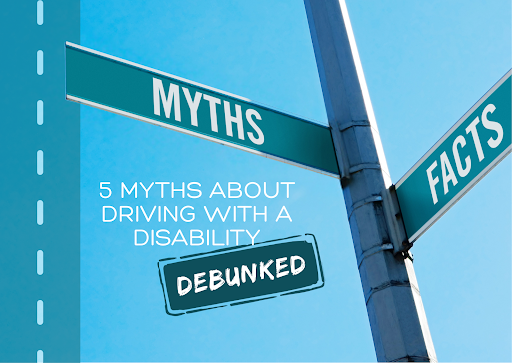
Here are five common myths about driving with a disability—debunked.
🚫 Myth #1: People with disabilities can’t drive safely.
✅ Fact: With the right evaluations, adaptive equipment, and training, individuals with physical, cognitive, or sensory disabilities can drive just as safely—and in some cases, more cautiously—than non-disabled drivers.
Certified driver rehabilitation specialists (like those at Driving to Independence) assess everything from reaction time to vision, and provide the tools and training each driver needs to succeed. Safety isn’t about whether someone has a disability—it’s about whether they have the right support.
🚫 Myth #2: Adaptive driving equipment is confusing or hard to use.
✅ Fact: Adaptive equipment is designed to simplify—not complicate—the driving experience. From spinner knobs and hand controls to voice-activated features and transfer seats, today’s technology is intuitive, efficient, and often customized to the driver’s exact needs.
Most drivers adjust to their adaptive equipment quickly, and many say it feels more natural than traditional setups once they’ve been properly trained.
🚫 Myth #3: You have to give up all independence if you can’t drive “the regular way.”
✅ Fact: Adaptive driving isn’t about giving up independence—it’s about redefining it. Whether it’s using hand controls, an accessible van, or a modified seat, these are just tools—like glasses or a hearing aid—that support your freedom, not limit it.
Driving may look different, but the goal is the same: to get where you want to go, on your terms.
🚫 Myth #4: Only wheelchair users need adaptive driving.
✅ Fact: Adaptive driving serves a wide range of individuals—not just wheelchair users. People with arthritis, MS, spinal cord injuries, cognitive differences, age-related changes, and more can benefit from modifications and training.
In fact, many drivers don’t realize adaptive driving options exist until they speak with a specialist. The truth is, accessibility looks different for everyone—and that’s exactly the point.
🚫 Myth #5: It’s too expensive to drive with a disability.
✅ Fact: While adaptive equipment and evaluations can carry costs, there are funding options, grants, and programs available to help. Veterans, vocational rehabilitation programs, state agencies, and nonprofit organizations often provide financial assistance.
Plus, a certified driver rehabilitation specialist can help guide you through resources and recommend the most cost-effective solutions based on your needs and goals.
Final Thoughts: The Road Is Wider Than You Think
Driving with a disability isn’t about overcoming the impossible—it’s about having the right tools, training, and support to make independence possible. If you’ve been told it’s not an option, or you’ve assumed it isn’t, we’re here to say: it might be more possible than you think.
Ready to explore what driving could look like for you or someone you care about?
At Driving to Independence, our certified driver rehabilitation specialists offer personalized evaluations, adaptive training, and honest guidance every step of the way.
Contact us today to learn more—because ability isn’t the barrier. Lack of information is. And we’re here to change that.