
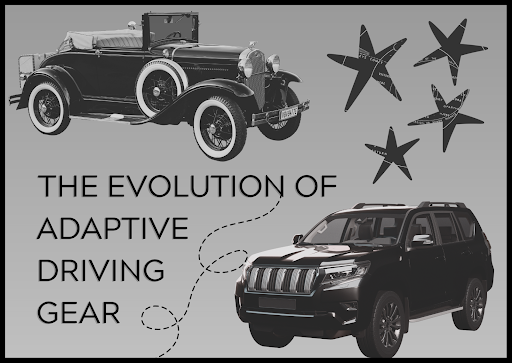
From Hand Controls to Smart Car Technology
What started as a workaround has become a movement.
Adaptive driving gear—once homemade, now high-tech—has transformed how people with disabilities experience the road. But its evolution is about more than equipment. It’s a story of resilience, innovation, and the right to move through the world with freedom and dignity.
The Early Days: Innovation Born of Necessity
In the early 20th century, there were no kits or guidelines for driving with a disability. People adapted with what they had—engineering their own freedom, one lever and pulley at a time.
One of the most iconic early examples? President Franklin D. Roosevelt’s 1933 DeSoto. Though he couldn’t use his legs due to polio, Roosevelt had the vehicle outfitted with hand-operated controls and a centrifugal clutch, allowing him to shift gears and drive without foot pedals. According to the Smithsonian’s National Museum of American History, this adaptation allowed FDR to drive independently—years before disability rights were even part of public conversation (source).
These early modifications weren’t just practical—they were political. They pushed back on the assumption that only able-bodied people belonged behind the wheel.
“Drivers adapted cars long before the industry adapted for them.”
— Smithsonian Institution, Shifting Gears
For decades, this spirit of DIY innovation filled the gaps left by a world not yet designed with access in mind.
Progress Takes Shape: The First Commercial Hand Controls
By the 1940s and ’50s, hand controls began to appear on the commercial market, spurred in part by the needs of disabled veterans returning from war and the growing visibility of people living with polio.
Manufacturers and organizations started responding—slowly—with standardized equipment:
- Push-pull and push-rock hand controls
- Spinner knobs for one-handed steering
- Left-foot accelerators
- Transfer seats
The groundwork was being laid. But access was still far from equal—and the cost and complexity of modifications remained high.
Training, Rehab, and a New Profession Emerges
As adaptive driving gear became more available, the need for specialized training grew. This led to the emergence of Certified Driver Rehabilitation Specialists (CDRS)—professionals trained to evaluate, instruct, and support drivers with disabilities using personalized approaches and adaptive tools.
This marked a shift from simply making gear available to making sure it was usable and safe—a huge step forward in building a more inclusive road to independence.
From Mechanics to Microchips: The Rise of Smart Tech
Today’s adaptive gear is a fusion of engineering and digital intelligence. While hand controls still exist (and serve many drivers well), newer options are customizable, intuitive, and deeply integrated into the vehicle’s system.
Modern adaptive tech includes:
- Joystick and touchpad steering systems
- Electronic braking and throttle systems
- Voice-activated controls and smart interfaces
- Automated ramps, doors, and seating systems
- Real-time diagnostics and safety monitoring
With every upgrade, the focus shifts from limitation to liberation.
Technology Is Advancing—But Equity Still Has Miles to Go
Despite innovation, accessibility gaps remain:
- Funding disparities make equipment out of reach for many
- Transportation deserts leave rural communities without options
- Healthcare providers and driving schools often lack training in adaptive mobility
The progress is real—but so is the need for continued advocacy, education, and systemic change.
From Custom Builds to Customized Freedom
Each piece of adaptive gear tells a story—not just of need, but of possibility. What began with handmade levers has become an ecosystem of tools and support systems designed to say one thing clearly:
You can drive. You deserve to drive.
And we’ll help you find the way.
At Driving to Independence, the Road is Personal
Whether you’re just starting your driving journey or navigating it after life has changed, we meet you where you are—with evaluations, training, and technology tailored to you.
We believe the road to independence shouldn’t be a detour. It should be designed for you.
Let’s get there—together.