
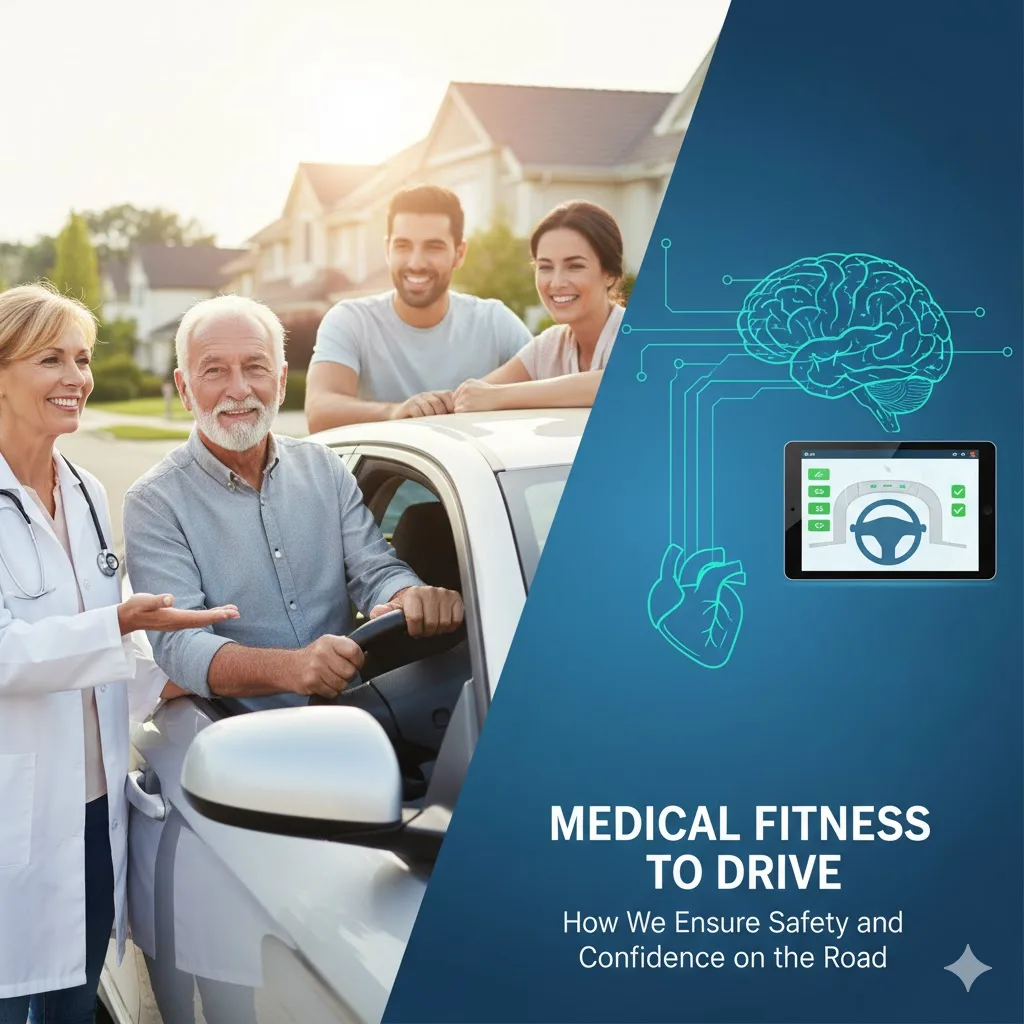
Driving is more than just a means of getting from one place to another—it’s a symbol of freedom, independence, and self-reliance. For many people, especially those recovering from illness, injury, or managing a medical condition, maintaining the ability to drive safely plays a vital role in preserving their quality of life.
At Driving to Independence, we recognize the significance of mobility in promoting community engagement and independence. That’s why our Occupational Therapists and Certified Driver Rehabilitation Specialists (CDRS) provide comprehensive driver evaluations and training programs. We assess medical fitness and functional status to determine the safest way for each individual to continue driving.
In this article, we’ll explore what “medical fitness to drive” truly means, why it’s so essential, and how our comprehensive driver rehabilitation process ensures safety, confidence, and independence for every client across Arizona.
What Is Medical Fitness to Drive?
“Medical fitness to drive” refers to an individual’s physical, cognitive, and visual ability to operate a motor vehicle safely. This concept recognizes that driving is a complex task—one that demands good judgment, coordination, reaction time, vision, and motor control.
A person may be medically unfit to drive if their condition affects their ability to safely control a vehicle, recognize hazards, or make quick, sound decisions on the road.
Common medical factors that may influence driving ability include:
- Stroke or brain injury
- Multiple Sclerosis (MS)
- Parkinson’s Disease
- Dementia or mild cognitive impairment
- Vision loss or visual field deficits
- Neuropathy or limb weakness
- Spinal cord injuries
- Arthritis or musculoskeletal limitations
- Seizure disorders
- Diabetes with hypoglycemic episodes
It’s important to note that these conditions don’t always mean a person can’t drive. However, they may require assessment, training, or adaptive equipment to ensure safety and compliance with Arizona driving regulations.
Why Medical Fitness Assessments Are Important
Ensuring that drivers are medically fit isn’t just a safety precaution—it’s a critical part of community well-being. A driver who struggles with reaction time, visual processing, or physical coordination can unintentionally put themselves and others at risk.
Here’s why medical fitness assessments are essential:
Safety for the Driver and the Community
A driver who is physically or cognitively impaired may have difficulty controlling the vehicle, maintaining lane position, or reacting to unexpected hazards. Evaluations help ensure that every licensed driver can operate a vehicle safely.
Early Identification of Challenges
Our assessments identify issues that could affect driving before they result in accidents or license suspension. Early intervention allows time for rehabilitation, equipment fitting, or retraining.
Independence and Quality of Life
Many individuals fear losing their license after a medical diagnosis. Our goal is to help people continue driving safely for as long as possible by exploring solutions, not restrictions.
Objective, Evidence-Based Evaluation
At Driving to Independence, assessments are grounded in clinical expertise and real-world driving experience. Our Occupational Therapists are trained to evaluate not just medical diagnoses but also functional ability, ensuring a fair and individualized outcome.
Who Needs a Medical Fitness to Drive Assessment?
You may benefit from a driver evaluation if:
- You’ve recently had a stroke, brain injury, or neurological condition.
- You have a progressive condition like Parkinson’s, MS, or dementia.
- Your physician, family, or the DMV has expressed concerns about your driving.
- You’ve experienced changes in vision, reaction time, or mobility.
- You’re returning to driving after an amputation, surgery, or long hospitalization.
- You require or already use adaptive driving equipment.
- You’re an older adult who wants reassurance that your driving skills remain sharp and safe.
In Arizona, physicians may refer patients for a comprehensive driver evaluation if there are concerns about their ability to drive safely due to medical or functional changes. Our goal is to support this process—ensuring drivers have every opportunity to stay mobile and independent while maintaining safety.
The Comprehensive Driver Evaluation Process
At Driving to Independence, we follow a two-part evaluation process designed to assess all aspects of driving ability. This ensures a complete understanding of each driver’s needs and capabilities.
Part 1: The Clinical Assessment
The clinical (off-road) evaluation is conducted by an Occupational Therapist/Certified Driver Rehabilitation Specialist (CDRS). It focuses on the underlying skills needed for safe driving and typically includes:
- Medical History and Medications Review: Understanding how medical conditions and medications may impact driving behavior or alertness.
- Vision Testing: Includes depth perception, peripheral vision, and visual processing.
- Cognitive and Perceptual Assessments: Evaluates memory, problem-solving, divided attention, and visual scanning.
- Physical and Motor Skills Evaluation: Tests strength, range of motion, coordination, and reaction time necessary to operate vehicle controls.
- Sensory and Functional Status Assessment: Determines if adaptive devices may be needed (e.g., hand controls, pedal extenders).
The clinical assessment gives our specialists a detailed profile of how your medical and functional abilities may impact driving.
Part 2: The On-Road Evaluation
Once clinical testing is complete, you’ll move to the behind-the-wheel assessment—the practical portion of the evaluation.
This phase is conducted in a specially equipped vehicle that allows safe testing for drivers with various physical needs. During this session, the evaluator observes:
- Starting, stopping, and steering control
- Use of mirrors and signals, and speed control
- Decision-making and reaction to traffic
- Awareness of surroundings and hazard recognition
The goal isn’t to “test” you—it’s to evaluate your driving in real-world conditions and determine what adjustments, if any, will enhance your safety.
What Happens After the Evaluation?
After both the clinical and on-road assessments, the CDRS provides a detailed report and recommendations, which may include:
- Fit to continue driving without restrictions.
- Fit to drive with adaptive equipment (e.g., hand controls, spinner knobs, left-foot accelerators).
- Need for additional driver training.
- Not currently safe to drive (with recommendations for rehabilitation or alternative transportation options).
Our therapists then assist in guiding clients through the next steps—whether that means training, equipment prescription, or helping with DMV-related documentation.
Adaptive Driving Equipment: Restoring Confidence Behind the Wheel
For individuals with physical limitations, adaptive driving equipment can be life-changing. Our specialists recommend and help fit equipment based on each driver’s unique needs, ensuring comfort, accessibility, and safety.
Common adaptive options include:
- Hand controls for acceleration and braking
- Left-foot accelerators
- Steering knobs and spinner devices
- Wheelchair lifts and ramps
- Adjustable seats and pedal extenders
Our vehicle assessments ensure that all adaptive equipment is correctly installed, tested, and tailored to your specific functional abilities.
How Driving to Independence Ensures Safety and Confidence
At Driving to Independence, our approach combines clinical expertise, advanced assessment tools, and compassionate care. Here’s how we help clients stay safe and confident on the road:
- Professional Expertise: Our team includes Occupational Therapists and Certified Driver Rehabilitation Specialists who are nationally trained in both medical evaluation and driver safety.
- Individualized Approach: We customize every evaluation and training plan based on your unique strengths, challenges, and goals.
- Evidence-Based Training: We use proven rehabilitation techniques and adaptive training methods that align with professional standards set by ADED (The Association for Driver Rehabilitation Specialists).
- Collaborative Care: We work closely with physicians, neurologists, physical therapists, and family members to ensure a coordinated care plan that supports long-term safety.
- Empowerment Through Education: We don’t just assess—we educate. Our team ensures every client understands their strengths, potential risks, and the steps needed to drive safely and confidently.
The Benefits of a Medical Fitness to Drive Program
Participating in a professional driver evaluation and rehabilitation program offers many advantages:
- Safety assurance for you and others on the road.
- Peace of mind for family members and caregivers.
- Personalized solutions for medical or physical challenges.
- Opportunity to continue driving with adaptive solutions.
- Professional guidance on DMV and medical documentation.
- Reduced risk of accidents, injury, or license suspension.
In short, a medical fitness to drive assessment promotes independence, dignity, and safety—the three pillars of mobility.
Supporting Arizona Drivers Through Every Step
Driving to Independence proudly serves communities across Arizona, offering driver evaluations, adaptive training, and mobility consultations to help individuals remain independent.
Whether you’re recovering from an injury, managing a medical condition, or simply seeking reassurance about your driving abilities, our compassionate and experienced team is here to help. Our mission remains the same—to help you drive safely, confidently, and independently.
Frequently Asked Questions (FAQs)
Q: Who can refer me for a medical fitness to drive evaluation?
A: Referrals often come from physicians, neurologists, physical or occupational therapists, or family members concerned about safety. However, you can also self-refer to Driving to Independence for a private assessment.
Q: How long does the driver evaluation take?
A: The complete evaluation typically lasts 2–3 hours, depending on your medical condition and needs. It includes both clinical and on-road assessments.
Q: Will I lose my license if I fail the evaluation?
A: No. Our assessments are designed to help you maintain your license safely whenever possible. Recommendations are shared confidentially with you and your referring provider.
Q: Can adaptive equipment be installed in my own vehicle?
A: Yes. After evaluation and training, adaptive equipment can be professionally installed in your personal vehicle once you’re cleared to drive with it.
Q: Is the evaluation covered by insurance?
A: Some insurance plans or vocational rehabilitation programs may cover portions of the assessment or equipment costs. We can help guide you through your coverage options.
Q: What if I’m not ready to drive yet?
A: If you’re not currently fit to drive, our specialists provide recommendations for therapy, training, or medical follow-up—and we can reassess you once improvements occur.
The Road to Safe Independence Starts Here
At Driving to Independence, our mission is clear: to facilitate mobility and independence through safe driver skills, while promoting confidence and community participation.
Through our medical fitness to drive assessments, adaptive equipment recommendations, and individualized driver training, we help Arizonans of all abilities stay safely on the road—today and for years to come.
If you or someone you know could benefit from a driver evaluation in Arizona, reach out to our team today. Let’s work together to ensure safety, confidence, and independence—every mile of the way.