
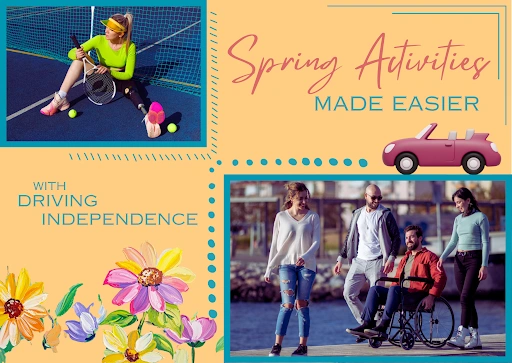
Spring brings a natural sense of renewal. As the weather warms and the days grow longer, many people begin looking for ways to spend more time outside, reconnect with others, and enjoy the activities they may have missed during the winter months.
For individuals with physical or cognitive challenges, participating in these activities can sometimes feel limited by transportation. That’s where driving independence can make a meaningful difference.
With the support of adaptive driving training and the right tools, individuals can regain the ability to get where they want to go—making everyday spring activities more accessible, flexible, and enjoyable.
Enjoying the Outdoors
Spring is one of the best times to spend time outside, whether it’s visiting a local park, walking along a nature trail, or simply enjoying fresh air in a familiar setting.
Driving independently allows individuals to:
- Visit parks and outdoor spaces on their own schedule
- Choose locations that best meet their accessibility needs
- Spend more time enjoying the experience without relying on others for transportation
Even short outings can have a positive impact on overall well-being. The ability to decide when and where to go adds a level of freedom that enhances these simple experiences.
Attending Community Events
Spring often brings an increase in local events, from farmers markets and festivals to church gatherings and community activities.
For many individuals, attending these events is about more than just entertainment—it’s about connection.
Driving independence makes it easier to:
- Attend events without coordinating transportation
- Arrive and leave at a comfortable time
- Participate more fully in community life
This level of flexibility can make social activities feel more accessible and less stressful.
Spending Time with Family and Friends
One of the most meaningful aspects of driving independence is the ability to connect with others more easily.
Whether it’s visiting family, meeting a friend for coffee, or attending a child’s activity, having reliable transportation can remove barriers that often make these moments more difficult to plan.
With driving independence, individuals can:
- Make plans more spontaneously
- Reduce reliance on others for rides
- Maintain stronger connections with loved ones
These everyday interactions play an important role in emotional well-being and overall quality of life.
Running Everyday Errands with Ease
Spring is also a time when many people begin catching up on errands, appointments, and daily responsibilities.
Driving independently can make tasks such as grocery shopping, attending appointments, or picking up essentials far more manageable.
It allows individuals to:
- Plan errands around their own schedule
- Avoid the stress of coordinating transportation
- Build confidence through regular driving routines
Even routine tasks can feel more empowering when they can be completed independently.
Building Confidence Through Experience
For individuals who are newer to driving or using adaptive equipment, spring can be a great time to begin building confidence behind the wheel.
Starting with shorter, familiar trips—such as visiting a nearby park or running a quick errand—can help reinforce driving skills in a low-pressure way.
Over time, these experiences can:
- Increase comfort in different driving environments
- Strengthen confidence in using adaptive equipment
- Support a gradual return to more complex driving situations
Each successful trip helps build a stronger sense of independence.
How Adaptive Driving Training Supports These Experiences
Driving independence doesn’t always happen on its own—it often begins with the right support.
Adaptive driving training helps individuals develop the skills needed to drive safely based on their unique abilities. This may include learning how to use adaptive equipment, adjusting driving techniques, and building confidence through guided practice.
Programs like those offered through Driving to Independence provide professional evaluations and training designed to support safe, independent mobility. With the guidance of trained specialists, individuals can work toward driving in a way that is both comfortable and safe.
Making the Most of the Season
Spring offers a natural opportunity to get out, reconnect, and enjoy everyday activities.
For individuals with physical or cognitive challenges, driving independence can make those experiences more accessible and more enjoyable. Whether it’s a short trip to a local park or a visit with family, the ability to get there independently can make all the difference.
If you or a loved one are interested in exploring adaptive driving training, learning more about your options can be a helpful first step.
Because sometimes, the ability to drive isn’t just about transportation—it’s about opening the door to everything that comes with it.